 |
|
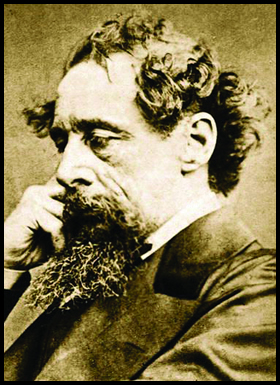
Charles Dickens Perhaps the greatest of
all English novelists |
| The Muse of Literature Welcomes You |
...Keats is to poetry what Schubert is to music.
...Shelley is to poetry what Schumann is to music.
|
|
—ETAF Staff |
Dickens on Dickens
Charles Dickens was one of the most creative,
talented, thoughtful, and respected literary authors of all time. His
understanding of human nature was deep and penetrating. His ability to
realistically, skillfully, and cleverly depict, explain, and champion the
character of human conduct in his writings was, still is, and always will
be unique.
Here are a few of the things he said and wrote about
himself and his work; they help explain who and what he was. They are
reflected in his writing.
| |
—A loving heart is the truest wisdom. |
| |
—Whatever I have tried to do in life, I
have tried with all my heart to do it well; whatever I have devoted myself
to, I have devoted myself completely; in great aims and in small I have
always thoroughly been in earnest. |
| |
—The whole difference between
construction and creation is exactly this: that a thing constructed can
only be loved after it is constructed; but a thing created is loved before
it exists. |
| |
—No one is useless in this world who
lightens the burden of it to anyone else. |
| |
—There is nothing so strong or safe in an
emergency of life as the simple truth. It opens the lungs, washes the
countenance, exercises the eyes, and softens down the temper; so cry away. |
| |
—A wonderful fact to reflect upon, that
every human creature is constituted to be that profound secret and mystery
to every other. |
| |
—We forge the chains we wear in life. |
| |
—I only ask
to be free. The butterflies are free. |
| |
—I feel an earnest and humble desire,
and shall till I die, to increase the stock of harmless cheerfulness. |
| |
—Charles Dickens |
other authors on their writing
Ah, words! they're not just for breakfast or lunch...
|
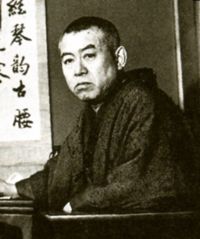
I would call back at least for literature
this world of shadows we are losing. In the mansion called
literature I would have the eves deep and the walls dark, I
would push back into the shadows the things that come forward
too clearly, I would strip away the useless decoration. I do not
ask that this be done everywhere, but perhaps we may be allowed
at least one mansion where we can turn off the electric lights
and see how it is without them. |
|
—Tanizaki Junichiro, 1886-1965
from In Praise of Shadows, 1934 |
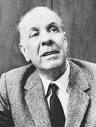
| It would be exaggerating to say that our
relationship is hostile; I live, I let myself live, so that
Borges can weave his literature and that literature justifies
me. ... I don't know which of us is writing this page. |
|
—Jorge Luis Borges, 1899-1986
from Personal Anthology, 1961. Borges and Myself
|
| |
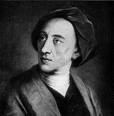
Stuff the head
With all such reading as was never read:
For thee explain a thing until all men doubt it,
And write about it, Goddess, and about it. |
|
—Alexander Pope, 1688-1744
from
The Dunciad, 1728-1743 |
|
about this feature
In this feature, The Muse explores works of literature, their authors,
and the worlds—real and imaginary—in which
these works and authors have their being.
These worlds are populated by
real and fictional characters, societies, cultures, places, events,
actions, histories, emotions, lives—a myriad of
things that make up and have made up the literary writings of the past and
present—all the things and more that writers have cared enough about to
set down for readers to read and all the writings that readers have cared to
pick up and read.
Despite the critical importance of writers, The Muse explores
writing chiefly from the reader's perspective. The principal focus of this feature
is reading and the reader, not the writing process or the writer. The aim is to travel along with the reader
as he reads, to assist by presenting facts and ideas that deepen the
reader's understanding and appreciation of what he is reading, thereby heightening
the reading experience.
the organization of this feature and of literary
subjects generally
Has the way literary subjects are organized and taught in schools ever
struck you as a bit ironic? Since writers write in
order to be read and to be admired by readers, one might think the reader would
be the focus of instruction. But in schools, the focus tends to be on the
writer, not the reader. Why does this sort of thing happen?
More
What is literature?—well, there's
literature...and
there's literature
What's literature? What's the subject of this feature?
The question has been debated for a long, long time in many, many expert circles
and the jury on a precise meaning is still out. As a first answer, The Muse
proposes that literature is not only high-sounding writing;
it also can be any kind of commonplace printed material, such as circulars, leaflets, or
handbills. And The Muse alleges that is answer is valid, despite popular
opinion to the contrary.
In this feature The Muse is not limiting the scope of literature; the
muse is concerned with all of its kinds, whether highbrow or lowbrow. And
further, The Muse represents these distinctions between different kinds of
literature by referring to them as Literature and literature.
- What's the definition of the term literature? What's the
difference between literature spelled with a capital "L" and
literature spelled with a lowercase "l?" It's vital to know:
tap or click here.
******
This feature spans two pages; it
continues on Page 2.
To see Page 2, click the page number below or click in the Feature Pages box near the top of the column at
the right.
—Page 1,
2—
|
|
—tip— the muse of literature wants
your complete attention Visit
The Muse Of
Literature Index for a list of all the sections belonging to The Muse of
Literature:
click here. |